

Nuclear for Australia made a submission to the Select Committee of the Legislative Council inquiry into Energy Affordability and Competitiveness in South Australia, calling for the federal nuclear prohibitions to be lifted so nuclear power can meet the state’s growing and diverse energy needs.

Summary and Key Findings:
South Australia has growing and diverse energy requirements that could be met with nuclear power. Nuclear energy is a proven source of clean, reliable, affordable energy used in over 30 countries and can be used in various applications beyond power generation including off-grid communities, mining sites and the defence industry.
Introducing nuclear to South Australia’s energy mix would provide abundant energy for the grid and industry, contribute to affordability and help reduce the state’s reliance on gas and imported electricity from other states like Victoria and New South Wales.
According to new polling Nuclear for Australia commissioned with YouGov, 63% of South Australian voters support exploring expanding the state’s energy mix to include nuclear power. Support was strongest amongst Coalition voters (82%), followed by One Nation Voters (78%). We even found support from a large majority of Labor voters (58%), and a high proportion of Greens voters (43%).
Modelling of the South Australian grid conducted in 2018 by Jacopo Buongiorno and colleagues in the MIT white paper 'Potential applications of the Modern Nuclear Fuel Cycle to South Australia' found that nuclear energy as a firm, clean energy source can improve energy affordability in South Australian with aggressive decarbonisation targets. They found “without nuclear, the average cost of electricity in SA would rapidly increase with decreasing carbon emissions.” The authors found that with 600-1500 MW of nuclear capacity, the average cost of electricity in South Australia can be kept fairly low even in deeply decarbonised scenarios. This scale is too small for large reactors; a fleet of SMRs or micro reactors such as the BWRX-300 (300MW) would be better suited.
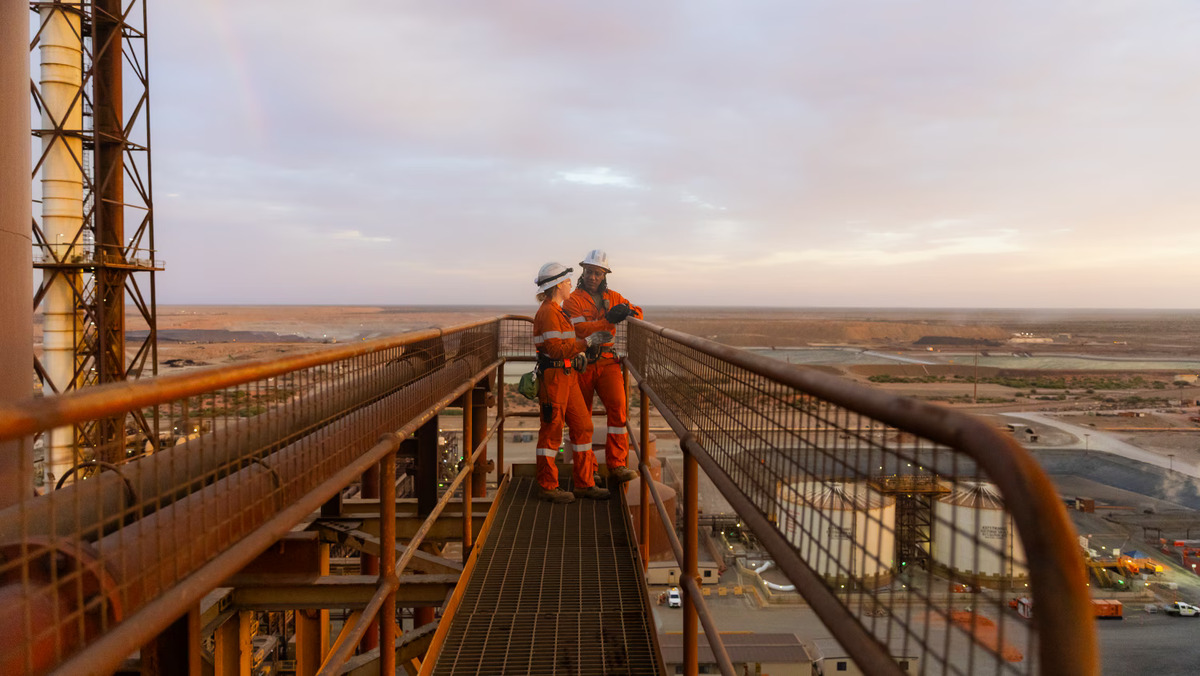
Nuclear energy, particularly through Gen IV reactors, could serve SA’s data centres, industry, mining, remote communities and defence requirements. IREN’s proposed data centre at Bundey would require a continuous, reliable load of 800MW, which alone would draw over 60% of SA’s current average electricity demand. Nuclear could provide this power through utilising its high, consistent, capacity factor. Approximately 35% of Australia’s mining sites operate off-grid, and half of SA’s mining site are disconnected from the NEM. Microreactors are also well suited to remote communities and isolated defence bases.
South Australia has strong foundations for a nuclear industry due to the state’s existing uranium industry, accounting for 8-10% of global uranium supply, and involvement in AUKUS. South Australia is one of the only states in Australia that does not have a state-prohibition on nuclear power. However, before nuclear-power plants can be built the federal nuclear prohibitions must be lifted.
- Recommendation 1: Advocate to the Federal Government to lift the federal prohibitions on nuclear energy.
- Recommendation 2: Repeal the Nuclear Waste Storage Facility (Prohibition) Act 2000.
- Recommendation 3: Establish a civil nuclear readiness program to coordinate matters including supply chain and workforce development and conduct early feasibility assessments.
- Recommendation 4: Organise an official government roundtable with advanced nuclear companies, major energy users and civil society to discuss civil nuclear power in South Australia.
- Recommendation 5: Replace existing renewable energy targets with clean energy targets that recognise nuclear power as a source of clean energy.