
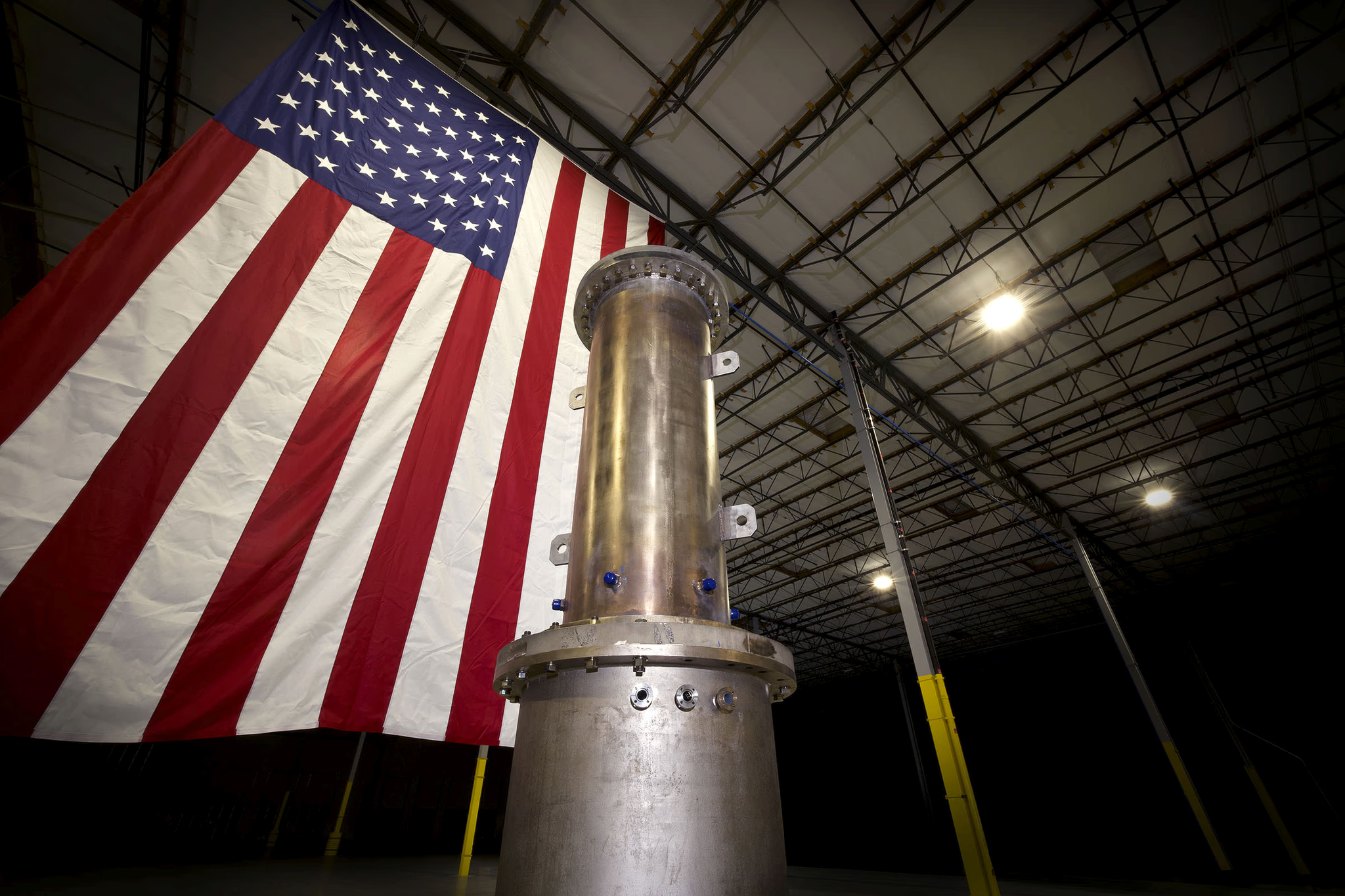
Nuclear for Australia welcomed news today that the first advanced reactor within the U.S. Department of Energy Reactor Pilot Program has reached criticality, heralding a major milestone in the commercialisation of advanced nuclear technologies.
“News out of the US overnight that the Mark-0 reactor reached criticality demonstrates that microreactor technology is transitioning from development to deployment,” Nuclear for Australia Founder Will Shackel said.
“Criticality is the point at which a reactor achieves a self-sustaining nuclear chain reaction – so this step demonstrates that microreactors are no longer a theoretical technology but an emerging commercial reality.”
The Antares microreactor design will produce approximately 100kW to 1MW of electricity. It is expected to be producing electricity by 2027 and be commercially available before the end of the decade.
The milestone also supports the objectives of President Trump's May 2025 Executive Order on nuclear energy, which directed federal agencies to facilitate the criticality of at least three new advanced reactors by 4 July 2026 as part of a broader effort to restore U.S. nuclear leadership.
Mr Shackel said these developments should be watched closely, because they represent is the type of reactor technology Australia could deploy to meet our energy needs with low emissions technology.
“Microreactors are essentially transportable “batteries” – designed to provide reliable electricity and heat for remote and off-grid applications,” he said.
“In Australia, this technology could be a low emissions solution for everything from mining operations and remote critical minerals projects, to defence facilities and critical infrastructure, or future AI and hyperscale data centres – because they would provide reliable, round-the-clock energy.
“Deploying this advanced nuclear technology would strengthen energy security, reduce emissions and enhance the competitiveness of our remote industries.”
“The time has come for us to take a truly technology-neutral approach to allow emerging nuclear technologies to be evaluated on safety, economics and emissions performance alongside other low-emission energy options. That’s why we must lift the bans on nuclear.” Mr Shackel said.
Image Credit: Antares