
[email protected]
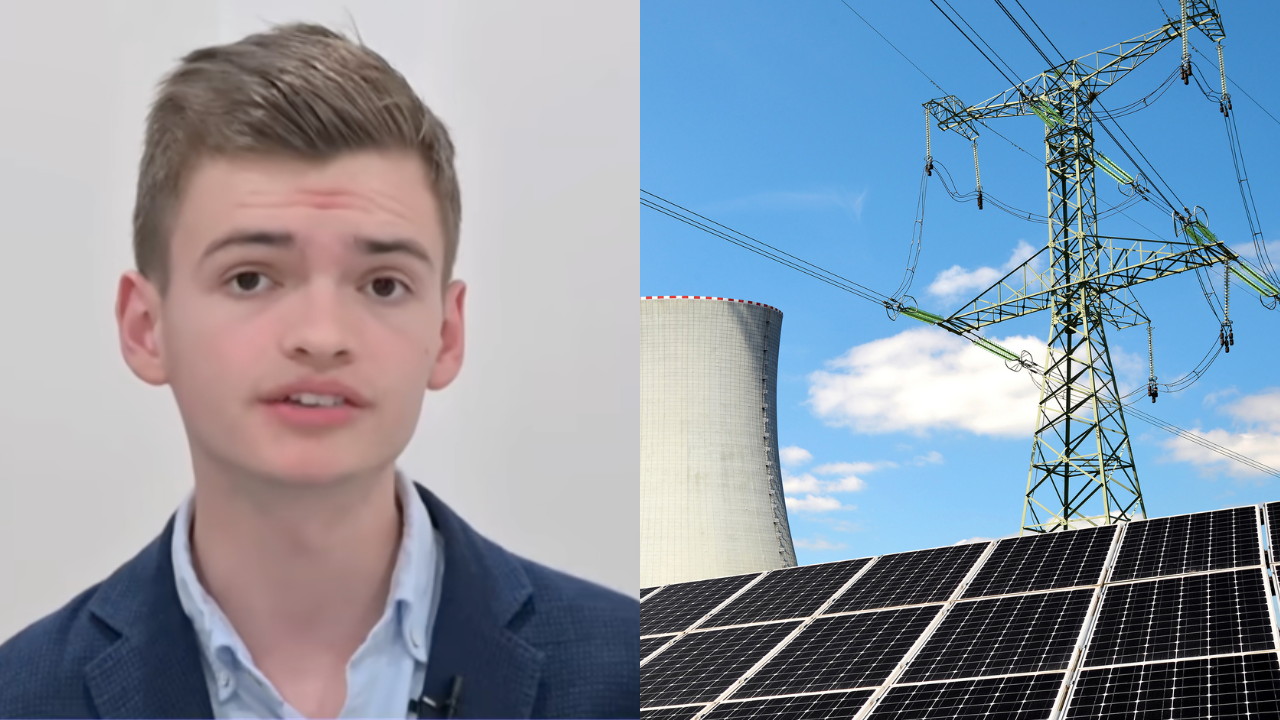
Nuclear for Australia founder Will Shackel interviewed by Jaynie Seal on News24.
Interview Transcript:
Jaynie Seal (Host): Shadow Industry and Sovereign Capability Minister Andrew Hastie spoke on Sunday Agenda this morning about how the world is moving on regarding civil nuclear energy. And I spoke to Emergency Minister Kristy McBain on her reaction for this earlier today. And here's what they both had to say.
Andrew Hastie [Clip]: Labour's pursuing this green fantasy of net zero. The rest of the world's moving on. They're buying our coal. They're buying our gas. They're building nuclear. They're investing in small modular reactors. We're getting left behind. And our country is de-industrialising at a rate that leaves us strategically vulnerable and economically uncompetitive.
Kristy McBain [Clip]: Renewable energy has been something that's been deployed across the country now for a couple of decades at least. Obviously small modular reactors are talked about frequently, but there is none actually operational anywhere in the western world. We've got to have a look at what the technology says and obviously continue to evolve as we move on.
Jaynie Seal (Host): Well, for more joining us live is Will Shackel, founder of Nuclear for Australia. Will, great to see you and thank you so much for joining us. You just touched down today from America. So, what's your reaction from what Andrew Hastie and Minister McBain has said regarding nuclear energy for Australia?
Will Shackel (Founder of Nuclear for Australia): Well, it's really encouraging to see Andrew Hastie continue in his support for nuclear power because it makes absolute sense that Australia should lift the ban on nuclear power, take advantage of our natural resources and strengths when it comes to nuclear. We've got the largest uranium reserves in the world. We've got decades of experience managing research reactors and we're developing a nuclear industry. So, it just makes sense to at least consider adding nuclear power in our energy mix. And what I'd say to the minister in response to her claim that small modular reactors don't exist is whilst it is correct that no small modular reactor is in commercial operation in the west, there are already three around the world in operation, there are multiple under construction in both the US and Canada, and recently I've been in the US where I actually stood on top of a micro reactor that just achieved criticality, specifically Aalo Atomics, which on July 4th their critical test reactor achieved criticality, a self-sustaining chain reaction, and on Friday last week I actually had the opportunity to stand on top of it. So, I've seen it with my eyes. The fact that advanced nuclear technology is developing and we've now actually had six of these micro reactors, so even smaller than a small modular reactor, achieve criticality, this crucial milestone in the United States, including one that was developed by a series of Australians, Deployable Energy's Unity Nuclear Battery. So, technology is developing really quickly and we should lift our ban so we can embrace all of these different options in Australia.
Jaynie Seal (Host): And also Will, just to let you know we only had a small clip of what the minister said. She did actually mention China and Russia. And certainly when we look at small modular reactors we did bring forward what you said about the Canadians and also the US looking at small modular reactors. But also I know that you've been speaking to somebody from Australia with a startup and we put this to the minister as well. So correct me if I'm wrong. You've got startup companies here like Deployable Energy having to go over to the United States because we don't have the moratorium lifted on nuclear energy. So they can't work on their startup for the micro reactors here. They have to go elsewhere being the United States. And that seems like a problem. If we just lifted the ban, they could come back. Is that right?
Will Shackel (Founder of Nuclear for Australia): Exactly. So Deployable Energy was the third micro reactor company in the United States to achieve criticality, specifically earlier in July this year. So there was a series of Australians, one of them the co-founder and CEO Bobby Gallagher is actually from Brisbane, who developed this micro reactor in the US, this groundbreaking technology. He was recently recognised in the Oval Office next to Trump. But what it's meant is that his reactor, which will be able to fit in the back of a ute, is being developed all the way in the US. And I had a chance to see where it was developed at Idaho National Laboratory where I was there last week. It's being developed over there in the middle of the United States because Australia's nuclear power ban means that those reactors, no reactor can be developed in Australia. So we're losing that innovation to other countries. And what's even more important is the fact that now that the reactor has gone critical and they're moving towards a commercial operation before the end of 2030, we're not going to actually at this stage have one of those reactors possibly in Australia, which is really disappointing when you consider our energy needs.
Jaynie Seal (Host): So on the flip side though, with what Labour is really saying, that we have enough energy here, perhaps down the track that is something that we could look at, but do you think it is too expensive? I mean we are doing the race to renewables, that is certainly what Labor is wanting. And perhaps down the track we could have something, or you're saying that we need it here now?
Will Shackel (Founder of Nuclear for Australia): Well, I think we can do two things at once. And certainly, when you look at the scale of energy demand we're facing in Australia, potentially by 2050 we're going to have to double the size of our grid, the amount of electricity consumed, in order to meet the rising electricity demand from data centres, electrification, all of these major new energy uses in Australia. And I think that means we have to have all clean energy options on the table, including nuclear power. And I think a good demonstration of why nuclear does stack up is we're seeing a lot of private investment at the moment, particularly from the tech companies, whether it's Google, Meta, Amazon, Microsoft, all investing in nuclear power at the moment, whether it's restarting existing reactors, building new advanced reactors to help meet their energy demands. And I think it's a demonstration that nuclear does work. There are specifically 39 countries now representing over 70% of global GDP which are committed to triple global nuclear capacity by 2050. So sure, we hear a lot of these arguments that nuclear apparently doesn't stack up in Australia. But what is it that we know in Australia that all of these countries which are actually pursuing nuclear power don't seem to? It's really quite mindboggling.
Jaynie Seal (Host): It's interesting as we're speaking, Will, we'll show our viewers perhaps the summit in India, the BRICS summit, and we know about the deal that the Labor government did with India. Talk us through that and here are some live pictures coming out from India.
Will Shackel (Founder of Nuclear for Australia): Well, recently the Albanese government signed up with the Indian government to do a uranium export deal because India plans to increase their nuclear energy capacity tenfold by 2047, and that's because they've got so much rising energy demand in their country. Now unfortunately Australia's nuclear power bans in many cases at a state level extend to uranium mining, which is simply unbelievable. We've got this clean energy resource under our feet which we're not taking advantage of. But it's just yet another demonstration that we're seeing around the world a global nuclear renaissance. A recent International Atomic Energy Agency report actually found that around 60 countries are either currently starting to develop a civil nuclear power industry for the first time or are seriously considering it. And that includes many countries in Australia's immediate region. So, we're really isolating ourselves on the global stage by not deciding to consider nuclear power as an option when frankly we're probably one of the best placed to benefit from it. We could be an absolute clean energy superpower whether it's through renewables or nuclear power if we had all of them in the mix, and ultimately we will need all the different options in the mix when you look at the energy challenges we're facing as a country.
Jaynie Seal (Host): And we are seeing overseas as well where we've just seen heat waves and nuclear power plants, a lot of misinformation there, but the baseload and what is needed when there are such weather events. And also quite a lot of summits on as well, there was one just in England, we've got one in New York coming up, the nuclear summit. So talk us through the importance of that and what they talk about.
Will Shackel (Founder of Nuclear for Australia): Well, certainly there's been a lot of nuclear get-togethers recently because there is this so-called nuclear renaissance happening all around the world where countries, companies are all coming together because people are now realising the importance of nuclear power as a source of clean, reliable, affordable energy around the world. And there's all of this technological development and it's now I guess on the nuclear industry to really meet the moment and to have this new wave of investment all around the world. And we're already starting to see it which is really exciting. But there's a lot of momentum in the industry and I think it's only time that Australia perhaps reflects on the fact that a lot has changed since our nuclear prohibitions were introduced in horse trading in parliament in the late 1990s. Perhaps I think it's time for the politicians to really consider whether it is a good opportunity to lift the nuclear prohibition. Certainly a lot of Australians...
Jaynie Seal (Host): We run out of time, but just quickly, so there's quite a lot of angles here isn't there. So you could lift the ban for startups, for example, don't even have to even look at building nuclear power plants. We could lift the ban to export uranium, don't even have to make power plants here. And also for people who are very concerned about climate change, some people aren't, some people are, for those who are really concerned about the climate, talk us through quickly if you don't mind how important nuclear energy is for the environment.
Will Shackel (Founder of Nuclear for Australia): Well, nuclear energy has the lowest emissions over its life cycle of any energy source. So, if you're looking for an energy source that's good for the climate, you better choose nuclear. In addition to that, it requires little land, few resources, and produces a very small amount of waste compared to other energy sources. So, it's a great solution in order to address climate change.
Jaynie Seal (Host): Are you jetlagged? You just got back this morning. [laughter]
Will Shackel (Founder of Nuclear for Australia): Hopefully you didn't notice during this interview.
Jaynie Seal (Host): No, no, you're fantastic as always. Great to see you, Will. And hope you get some good sleep and no doubt we'll chat soon. Thank you.
[End]
This transcript was generated with the assistance of AI and may contain errors.